
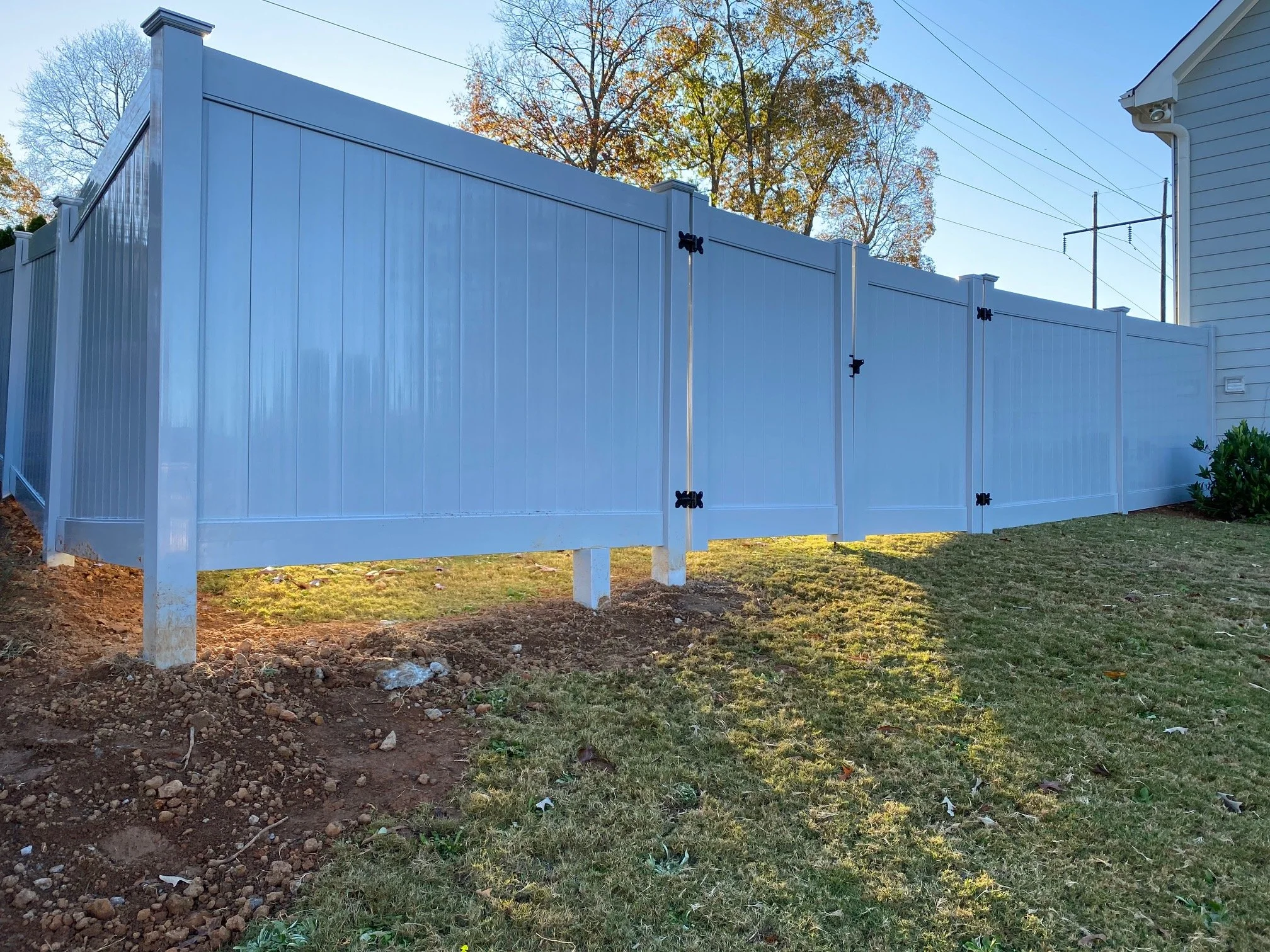
At Cooper Carpentry & Fencing, we’re dedicated to providing our clients with the highest quality craftsmanship and the most durable fencing solutions. That’s why we consciously avoid installing polyvinyl chloride (PVC, vinyl) fencing, and why we urge prospective clients to choose traditional materials instead. Here’s why:
Durability concerns
Despite its initial appearance of strength, PVC fencing often falls short when it comes to long-term durability. Exposure to UV rays and extreme weather conditions can cause PVC to become brittle and crack over time, compromising its structural integrity. Timber, on the other hand, has a proven track record of longevity and can withstand the test of time with proper maintenance.
Environmental impact
PVC is a synthetic material derived from petroleum, making it inherently harmful to the environment. The manufacturing process of PVC involves the release of toxic chemicals and greenhouse gases, contributing to air and water pollution. Additionally, PVC fencing is not biodegradable and can end up in landfills, further exacerbating environmental issues. As advocates for sustainable practices, we prioritise the use of natural, renewable materials like timber or recyclable materials like Colorbond in our projects.
Shiny, yellow and cheap
While PVC fencing may offer a uniform appearance initially, it lacks the natural beauty and character of timber. PVC fences have a plastic-like sheen which cheapens the visual appeal of a property, and what is white today becomes yellow in time with UV exposure. In contrast, timber fences exude warmth, charm and authenticity, and can be easily painted or stained for a freshen up when neeed, enhancing the overall aesthetic of any outdoor space. With a variety of timber species and design options available, clients can customise their fence to complement their property’s style and architecture.
Terrain considerations
PVC fencing typically lacks the flexibility needed to accommodate uneven terrain. Unlike timber and some other fencing materials, PVC panels are typically pre-fabricated in standard sizes and designs, making it challenging to adjust them to fit the contours of irregular landscapes. This limitation can result in unsightly gaps beneath the fence or sections that do not properly align with the ground, compromising both the aesthetics and functionality of the installation.
Repair and maintenance challenges
Unlike timber fencing, which can be easily repaired or replaced, PVC fencing presents challenges when it comes to maintenance and repairs. Cracked or damaged PVC panels may need to be completely replaced, resulting in higher maintenance costs over time. In contrast, timber fencing can be repaired with simple tools and techniques, minimising downtime and expense for property owners.
Poor value in the long-term
While PVC fencing may initially appear cost-effective due to its lower upfront installation costs, it often proves to be a poor investment in the long run. With its susceptibility to damage, limited lifespan, and higher maintenance requirements, PVC fencing can end up costing property owners more in the form of repairs and replacements. Timber fencing, on the other hand, offers exceptional value for money, providing enduring beauty and functionality for years to come.
At Cooper Carpentry & Fencing, we believe in providing our clients with fencing solutions that are “Built to Last”, prioritising quality, sustainability, and longevity. While PVC fencing may have its fans, we remain steadfast in our commitment to traditional materials like timber, which offer unmatched durability, aesthetic appeal, and environmental sustainability. By choosing timber fencing, our clients can enjoy peace of mind knowing that they’re investing in a fencing solution that will enhance their property’s value and beauty for generations to come.