
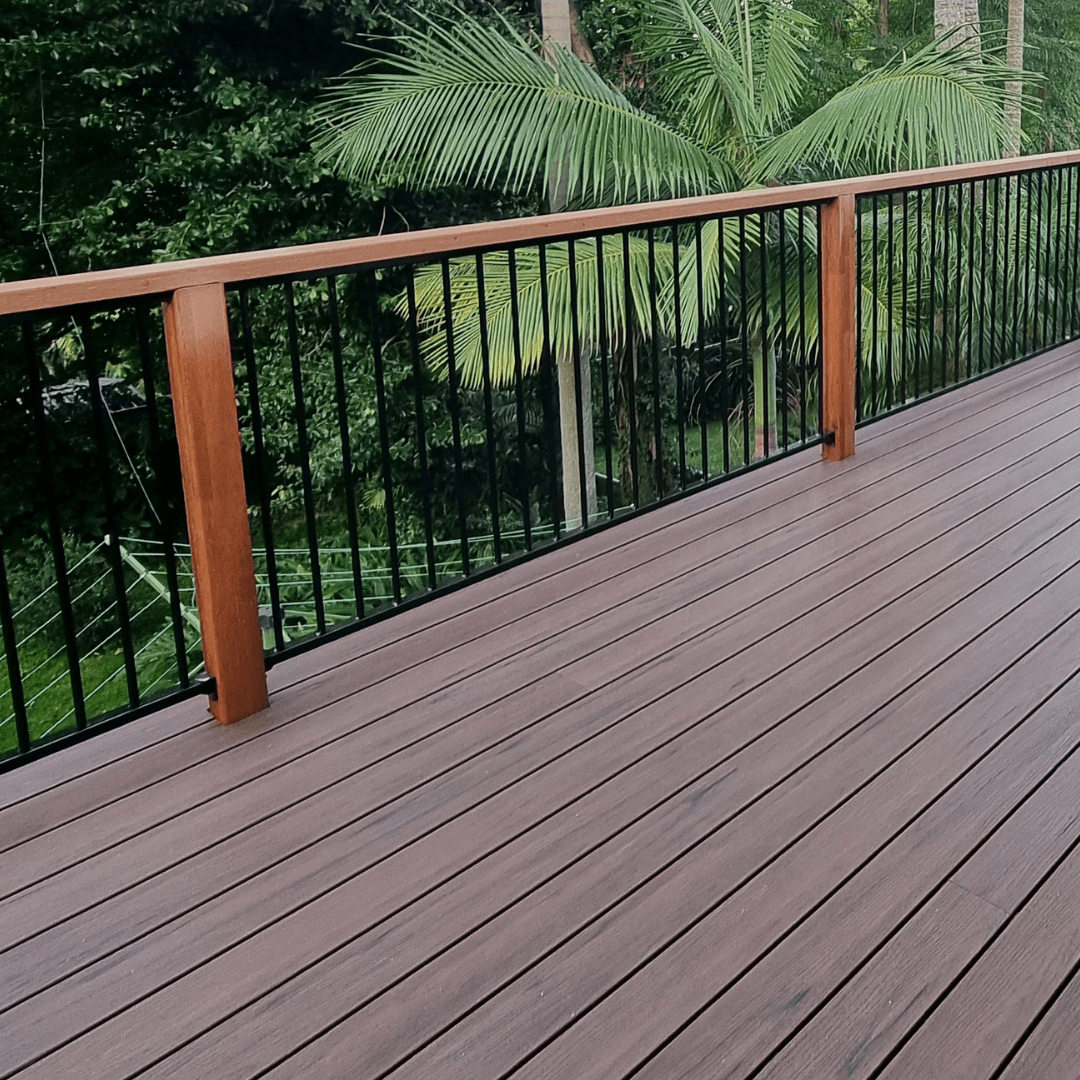
Choosing the right decking material is a crucial decision that can impact the beauty, durability, and maintenance requirements of your outdoor space. With so many options available, it’s essential to weigh the benefits and disadvantages of each material to make an informed decision. Here, we’ll explore the three most popular decking materials – pine, hardwood, and composite timber – and discuss their advantages and drawbacks, helping you decide on the perfect option for you.
Pine decking
Pine decking is, of course, the most affordable option. Its warm tones and rustic appearance create a cozy atmosphere, perfect for relaxing outdoors. Pine decking can also be painted to achieve a customised look, allowing homeowners to match their decking to their desired color scheme or décor. However, the affordability of pine decking comes with trade-offs. It’s less durable than hardwood or composite materials and requires regular maintenance to prevent warping, splitting, and decay. Additionally, its lifespan is shorter compared to hardwood or composite options, necessitating more frequent replacement.
Hardwood decking
Hardwood decking exudes natural beauty and elegance with rich colors and intricate grain patterns. Its durability makes it resistant to rot, decay, and insect damage, ensuring longevity with minimal maintenance. The dense nature of hardwood also provides added strength, making it ideal for high-traffic areas and heavy furniture placement. While hardwood decking offers long-term value, it comes with a higher initial cost and sourcing considerations. Some hardwood species may be sourced from unsustainable areas, requiring careful selection and certification.
Composite wood decking
Composite wood decking presents a low-maintenance alternative to natural wood, requiring no sealing, staining, or painting. Its durability makes it resistant to rot, decay, splintering, and insect damage, ideal for homeowners seeking a hassle-free outdoor space. Composite decking comes in various colors, textures, and finishes, offering versatility and customisation options. However, its upfront cost may be higher than pine and some hardwood decking, and some materials may retain more heat, making them uncomfortable in high temps and heavily sun exposed areas, such as pool surrounds. Additionally, while composite decking mimics the look of real wood, some homeowners may prefer the authenticity of natural materialsWhen choosing a decking material, it’s essential to consider factors such as durability, maintenance requirements, appearance, and budget.
Pine decking offers affordability but requires regular maintenance and has a shorter lifespan. Hardwood decking boasts natural beauty and longevity but comes with a higher initial cost and sourcing considerations. Composite timber decking provides low maintenance and durability but may be more expensive upfront and lack the authenticity of real wood. By weighing the pros and cons of each material, you can select the option that best suits your needs, preferences and budget, ensuring a beautiful and functional outdoor space for years to come.